Saturday, June 19, 2010

Varanasi


The time you spend traveling around this massive country is astounding: 7 hrs in a jeep, 14 hrs on a bus, 19 hrs on a train. The roads are slow, the traffic heavy and the distances vast, and we’ve never even undertaken one of those 40 hr. train rides you hear people talking about to get across the entire country. To get from Sikkim to our next destination, the holy city of Varanasi, we took a 6 hr. jeep ride to Darjeeling, another 5 hr jeep ride to Siliguri from there, a 19 hr train ride, an hour-long auto-rickshaw ride and finally a bicycle rickshaw ride to get to the Vishnu Guesthouse, above the Hanuman Ghat on the banks of the Ganges in Varanasi.


As you ride through the streets of Varanasi, the energy of this holy Hindu city that has been continuously inhabited for over 3000 years, and whose cremation pyres have been burning for over 2000 years is mesmerizing. In addition, you are hit with a constant stream of annoying touts, who are famous for their scams, aggressiveness, rudeness, and ruthlessness in this city. We got our first taste of one when our bicycle rickshaw driver, instead of taking us to our chosen guest house, took us instead to one of his buddies in a different direction who tried to sell us a guest house in order to get a commission. After yelling at them both using expletives that, best for all involved were probably not understood, we took our massive backpacks went the rest of the way on foot, not trusting any of these thieves, through the narrow maze of alleyways crowded with shops, people, garbage and cows, to our guesthouse. More that 30 hrs after starting our journey we finally lay our packs down, in the searing heat of the city, gathering forces to take on this city for the next few days.


No other place in India, and perhaps the world, is as in-your-face and brutally naked as Benares (Varanasi). It is the heart of the Hindu faith, a city that runs along the river which contains the water that cleanses the soul, and brings Moksha – enlightenment – to those who die here. The city may have an ancient soul, but its buildings and infrastructure is relatively new, having been pillaged, burned and laid ruined to multiple times, the last assault by the Moghuls in the 15th and 16th century. Varanasi is also ungodly hot, with summer temperatures soaring near 50 degrees Celsius (well over 100 degrees F).

We gave ourselves 2 days, despite the depth of this city, thinking that with the heat, the annoying touts, the stench and filth of the place, a few days would be all that we could handle. The holy Ganges river unfortunately is also one of India’s most polluted places.


Varanasi is the confluence point of the four rivers that make up the sources of the Ganges. Each of these rivers is said to be created from a drop of the holy amrita (nectar) sprinkled by the gods at the beginning of time. In reality, with damming and farming, it is estimated that less then 1 percent of these source waters actually reach Varanasi. Furthermore, along with the 32 open pipes in Varanasi alone that dump sewage directly into the river, multiple industrial sites along the river dump large quantities of waste. This, coupled with millions of offerings, people washing clothes, bathing, animal and human excrement and the dead bodies and cremated remains dumped into the river, it is no wonder this place is destroyed. To put it into perspective, normal bathing water has a bacterial count of 500 E-coli per liter of water; the water of the Ganges has 1,500,000 per liter. Of course, this doesn’t stop the natives, pilgrims, herds of water buffalo, and hordes of devotees from bathing, praying, drinking, gargling, cooking, frolicking, laundering, swimming, and prostrating themselves in the putrid, sacred water. Almost all travelers get sick in Varanasi, and so, even though we have been blessed with iron stomachs, (probably by the divine intervention of Vishnu, Shiva or maybe just 4 months in Africa), we decided to play it safe and not drink tea or eat too close to the river in which the wallahs most likely collect water to boil and wash their glasses.


The best way to see Varanasi is from a boat on the river, which you can hire readily. From there you can watch the pilgrims and residents descend to the river at dawn and dusk to perform Puja, or devotion, mostly unmolested by touts, save the occasional boat-propelled salesman. However, the alleyways, and riverbank ghats are also interesting to tour on foot. Timing is also important, as between 9 am and 5 pm the heat is so oppressive one just has to lay low in the shade with a cool glass of mango juice. We awoke our first morning at 6 am and walked north along the river, along the various ghats, watching pilgrims “swim,” bathe, prostate, do laundry, or fish by the sewer pipes. Every ghat also has a temple, in which a lingum, a phallic representation of the god Shiva, has offerings made to it. The light in the early morning is magical. As the heat of the day rose to a crescendo, we left the shadeless river and made our way through the more shaded alleyways and markets of Varanasi to the modern part of the city, where we found a hotel that would let us wallow in their pool during the hot hours of the day.


We walked back to the river in the evening via the Muslim quarter, where silk cloth is woven by hand and on mechanized looms, to watch the ceremony that takes place every sunset at the main Dashaswamedh ghat. In the ceremony, a dozen priests perform devotion and blessing to music and crowds with incense, fire, flower petals and choreographed dance. From a distance we could see the fires of Manikarnika ghat, the buring ghat, the most auspicious place to be cremated in Hindu tradition. After the ceremony we made our way to those very burning ghats, one of the most intense places we have ever been. The most sacred place to be burned in the Hindu faith, the ghat has been in continuous operation for over 2000 years. Specific roles are played by priests, family members and the untouchable cast who set the body on a pyre of sandlewood after having dipped the body in the Ganges. Then, visible to all, and naked as the day the person came into the world, the body is set aflame and burns for 3 hours exactly. Afterwards, a remain of the body, usually a piece of bone is found in the fire by the priest, who passes it using 2 sticks to the elder son who tosses it into the river. The place is heavy and mesmerizing, and not for the weak of stomach or constitution, and raises many an existential thought.


The next morning we woke up at 5 am and found a boat man who would take us up and down the river to watch the action from the water. The sunrise created magical light as the throngs of devotees descended upon the banks in the ancient tradition. From stoned Sadus, men dressed in orange robes with shockingly white hair and long beards who have renounced all material goods and possessions, to mourners, to frolicking Indians on vacation/pilgrimage, the river ghats were chock-full of people and color, filth and flower petals. We floated peacefully by the waters, which provided endless opportunities for photos and people watching.


That afternoon we bade farewell to this special place, and whether one hates it or loves it, Varanasi leaves a stamp upon the soul and questions in the heart. We made our way back in the searing heat that burns any exposed skin to the train station and a blissfully air-conditioned sleeper car to the capital: New Delhi.


To see more pictures of Varanasi, please click here.

Thursday, June 10, 2010

Sikkim

A tiny state in the north of India, Sikkim was an independent Buddhist kingdom until 1973 when it was annexed by India following the war between China and India. Sikkim is made up of mostly Nepali and indigenous Lepcha tribe people. It is treated well by the Indian government, who pours in tons of money to encourage tourism, low-land Indians to move north and mix into the indigenous population, and keep Sikkimese content with Indian governance. The state borders China (Ex-Tibet), Nepal, and Bhutan and is a state of steep lush green hills and deep valleys of rushing glacial rivers culminating in the massive Himalayas along the north and western borders. Tibetan Buddhism flourishes in this fog shrouded cloud forest and this time of year, one has to be lucky and up at sunrise to catch any views of the high peaks. But we were adamant to catch a glimpse of the 3rd highest mountain in the world, Kanchenjanga.

India, despite encouraging tourism to Sikkim sure has a lot of red tape involved in trying to do any hiking in the wilderness. There were 3 layers of permits, one for Sikkim, another for trekking and one for entering the national park with a maximum of 15 days in the state. As per usual you must hire a guide and porters, this time in the form of 2 yaks and a yak-man. The trek to hike in Sikkim is Goecha-La pass (other treks require over 6 months to attain permits), at a little over 16,000 feet, the hike takes you to the base of the REALLY BIG mountains. The standard timetable takes 8 days, including 2 acclimatization days and an entourage of cooks porters, assistant cooks, assistant porters and the like. We decided to do the trek in 5-6 days, and with our own gear, requiring only with the mandatory guide and yaks. To that end we found an outfitter who agreed to our terms.

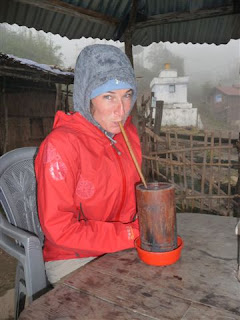
We got a small taste of what is an almost universal experience for tourists in India: a scam. The trek ended up being wonderful, but the tour operator tried to screw us in multiple ways. He gave us an inexperienced, minimal English-speaking guide (remember that he already gave us one of those on the previous trek; shame on us I guess), totally unprepared, who 1 day into the trek revealed to us he was given no tent, no stove, no food, and no clothes to camp the night before the pass! On the night before “summitting” the pass we had to wake him up (he had no watch), made him tea (he had no stove), lead with our headlamps (he had no flashlight) and had it been colder or raining, we would have been keeping him warm to ward off hypothermia. Needless to say, we appreciated even more our guides in Africa for their ability to understand what we were looking to do and help us to do it. Furthermore, the outfitter screwed a fellow hiker who was stranded without a guide in the middle of the hike because, without our or her knowledge, our guide was supposed to “slow” us down and bring her along. She had to leave the outfitter and go with another guide half-way into the trek. In India disrupting protocol is very, very hard for people and we went way out-of-bounds with our demands to camp (instead of huts and lodges), cook our own food (instead of their cooks making 3 hot meals and tea), and push the normal pace.The trek starts in the town of Yuksom, a Buddhist village catering to trekkers with serene gardens, stupas, and monasteries. Aspiring young monks and elder teachers walk the village in crimson-yellow robes counting prayer beads. The town was the first capital of Sikkim, and you can visit the coronation site of the first king in 1601. The few restaurants serve local fair of momos (veg dumplings), chow mein, noodle soup, dal with rice and vegetables and yak cottage cheese. The locals brew “thongba” - made from millet that is served in a wooden mug and drunk through a bamboo straw and is drunk by refilling with hot water. It tastes sort of like hot sake, if you use your imagination, and it gets the job done- after about 4 or 5 refills, you are definitely toasty.
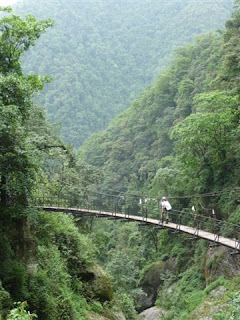
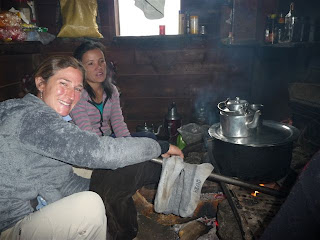
From Yuksom we climbed through dense rainforest 18 km to a hut at the tiny village of Tshoka at 3000 meters through dense rainforest. We befriended a group of 3 Indians from Mumbai (although they call it Bombay), and befriended them for the next 2 days, enjoying their company and hearing about life as young, up-and-coming artists in India.The second day was a steep climb to the next hut at Dzongri (3600 m) and we arrived in a cloudy drizzle. We set up our camp inside the very basic hut, in a room with broken windows and a wood floor, and tried to dry our wet clothes by the caretaker’s fire. Dzongri is famous for mountain views and the sun rises at 4:30 am but by 6 am the clouds move in and completely obliterate the view. We were rewarded for 20 minutes following a short scramble up a nearby hill with stunning views of the Kanchenjanga massif. The rest of the third day we made our way to a beautiful valley called Lamunie at the base of the glacial moraine which defines Goecha-La pass. The valley is surrounded by massive, glacier-covered, sharp, scary beautiful peaks, but you would never know it walking during the day through thick clouds. We heard ice falls as we were walking in, though, so we knew there were some big mountains nearby and at night, before dusk, we glimpsed 2 of the peaks: Joponu and Pandim clouds flew by, showing us the icy, jagged peaks where the wind was whipping snow off the surface. A cheeky horse grazing near by ate a loaf of our bread and some apples from our food stock that had been left in the brick lean-to kitchen that has been set up at the sight, but we made dinner and settled in for sleep early, as we would be waking up early to summit.
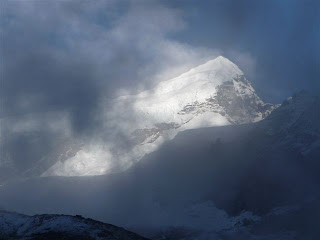
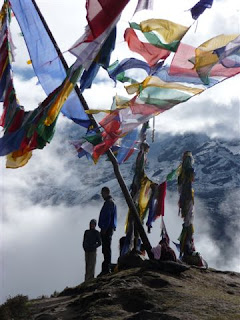
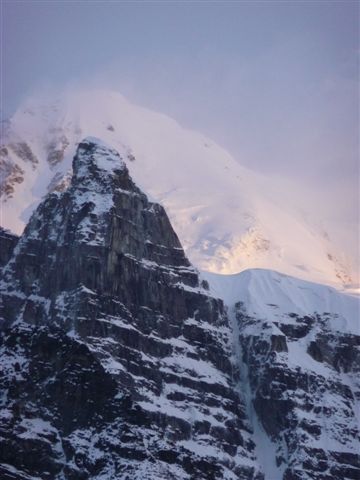
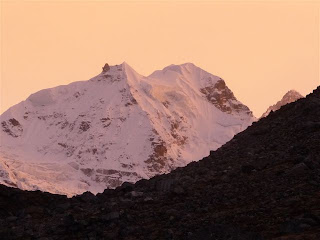
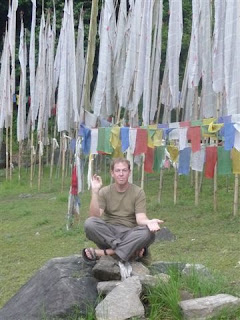
We woke up at 2:30 am to bright moonlight and mountains staring down at us and, after waking up our guide, we headed up to Goecha-La pass. As night turned to dawn we watched the colors change over the quiet, stark landscape of a glacial moraine and lake and the surrounding peaks. The sun came up and turned the tops of the mountains a beautiful gold and we reached Goecha-La pass at 5 am, signified by prayer flags and rock pile shrines, with about 20 minutes to stare and marvel at the awesomeness of these huge mountains: Kanchenjanga, standing another 12,000 feet above us (we were already at 16,000 feet). A huge bank of clouds moved in and we hiked down but got a second chance with about 2 hours of bright sun and clear views as we ate breakfast and broke camp—it was definitely the clearest morning of our entire time in the north of India and it was amazing. We even saw an avalanche on one of the peaks behind our camp. That day was a big one and we covered 40 km by the time it was all said and done, getting ourselves back down to Tshoka, the first hut, so that we could make it back to Yuksom the next day. We celebrated with thongbas and hung out with the caretaker of the hut and his family.
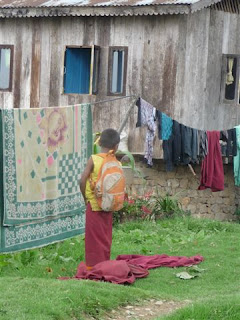
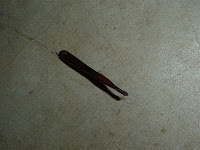
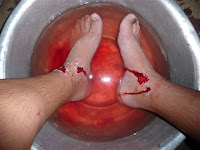
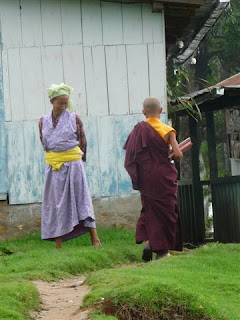
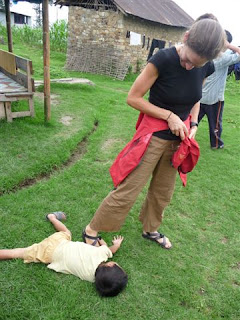
The final day of the trek got us back to Yuksom where our celebratory meal was, unfortunately, local food and not a meat-filled meal to quench our protein-deprived states. We hung around the village, visiting some of the temples and shrines and talking to other travelers over dinner and beers. Our bodies were tired but we pushed the next day and hiked again, this time with our big backpacks (we had no yaks). We decided to visit Kachepari Lake, a sacred lake for Buddhists about 10 miles from Yuksom, reachable by a hike that takes you very steeply down and then very steeply up again, after crossing a river. The gods and our aching legs wanted us to chill out and we were dumped on by heavy rain during the hike. We got lost and bushwacked for awhile and by the time we reached our destination, soaked and muddy and exhausted, we were further rewarded by finding leeches all over our feet and ankles. The little things are tiny before they find you but once they latch on and start sucking blood they grow as big as a finger and when they come off, the bleeding is heavy and does not stop! Guy got destroyed and pretty much ruined a pair of shoes by bleeding, but we were greeted by our host Sonam at the guesthouse where we stayed, who took amazing care of us. We spent 2 days living with his family, playing with his 2 kids, eating delicious Nepali food, reading, sleeping (admittedly on very thin, uncomfortable mattresses) and getting enveloped in their mellow, simple, loving community. The Buddhist village above this holy lake is tiny and pretty untouched by the outside world and we watched the little boy monks walk to school at the monastery, the cows being milked, the gardens being harvested, and the children rough housing in the grass. The lake itself has been turned into a sort of Hindu shrine and many Indian tourists come to pray or do puja or make an offering, despite the fact that it is a Buddhist place. The more we see, the less we understand about any of these religions, but it is very clear that the boundary between Hindu and Buddhist, at least, is very hazy and they are quite fluid with each other.
We had to leave Kachepari lake after 2 days and made our way back to Darjeeling by jeeps packed to the gills and careening over cliffs on windy roads in the fog, always reassuring. We spent one more day in Darjeeling, doing laundry and walking about. As we left we heard rumors about another strike that was to happen 2 days after we left, but we got out of town without incident and caught a train that would take us to Varanasi, the holy city on the Ganges—back to the heat, noise, in-your-face frewnzy of India!

For more pictures of Sikkim and Yuksom click here

For more pictures of Goecha-La and Kanchenjunga peak click here

For more pictures of Kachepari Lake click here

Tuesday, June 8, 2010

Darjeeling and the Singalila Ridge Trek


“You should make sure that place is open before you go” and “that place is always on strike” or “nothing but trouble” is what we heard when we told people we are heading up north to the capital of tea and the former British hill station, Darjeeling. The plan was to enjoy the views of the Himalayas and to make it our base-camp to trek in the northern Buddhist state of Sikkim, which sits just north of Darjeeling and was annexed by India in 1973 to create a buffer zone between itself and China and is now a happy and peaceful Indian state that appears to have given China the middle finger.


Darjeeling and the surrounding are of the north of West Bengal is made up of mostly Nepali people, or Gorkha, as they call themselves. They look and act different from the Indians of the lowlands, they have Asain features, they are quieter, mellower and many are Buddhist. They want their own state, with the unfortunate name of Gorkhaland. Signs and propaganda for the proposed state are everywhere, on storefronts that have changed their address from “West Bengal” to “Gorkhaland” and all awnings and signs. It’s not exactly clear to us whose side is right. Some Gorkha say that it is their right to self determination, and since they (being Nepali) are so different from the rest of the state they belong to (West Bengal- the very Indian state whose capital is Kolkata.) Other’s say that its all bullshit, with politicians inciting uneducated masses to nationalism when all they really want is the power and wealth that would come when they rule their own state. Whatever the answer or reason, everyday people and internal, as well as foreign tourists who escape the summer heat and flock to the coolness and views of Darjeeling pay the price with power outages, constant strikes of stores, restaurants, supply vehicles and transport jeeps and general pain-in-the-asseness.


To get to Darjeeling we climbed from the plains of Siliguri, where we got off the train, northward, up the twisting and steep mountainside of the Himalayan foothills, to an elevation of 2200 meters. On the way we passed endless tea estates where women carrying baskets on their backs and heads collected the golden and precious leaf tips which make this region world famous. Our road closely followed the twisting miniature track of the “toy train” or the Darjeeling express, the small gauge railroad operating since 1881, famously shuttling tourists to their summer retreats. We were lucky: a planned strike had just ended and transportation was working again. We met several folks who had gotten stuck in Siliguri for a few days waiting out the strike before they could get a jeep to take them to Darjeeling.


Darjeeling is a nice town, almost a city. It cascades down a high ridgeline that, with good views showcases the not-so-far-away high peaks of the Himalayas and in particular the Kanchenjunga massif, the 3rd highest mountain in the world. It has a bustling market hawking all the usuals and a transport hub, above which lies the city, where mostly Indian tourists escaping Kolkata’s heat gather in the Chowrastra (square) while their chubby little kids ride ponies around or feed the cheeky rhesus monkeys. In all reality, there isn’t much to do in Darjeeling but enjoy the views, which are rare in this cloud shrouded town, unless one wakes up at dawn. Otherwise, you can shop for Pashmina and other Nepali or Tibetan crafts, enjoy the national food: momo’s – vegetable stuffed dumplings – with a side of hot chilli sauce, and relax in the cool atmosphere, taking in the subtleties of Nepali and Buddhist culture and the holy atmosphere of some of the monasteries and gompas. Darjeeling’s population is completely different from the India we have known until now. Consisting of 85% Nepalese, and the rest Sikkimese tribes such as Lepcha, Tibetan, and other Indians, the place feels more like Nepal or even China than it does India. People are calmer, quieter, and courteous. Men don’t stare in the ogling way that they do in India. Women dress more modernly. Men and women interact with each other, the language sounds more asian, and overall the place has a welcoming aura of peace. Hindusism is less apparent and Buddhism more, though the two appear to interact and blend more fluidly then we thought they would.


Our plan was to trek a nearby circuit called the Singalila trek that passes through inaccessible villages and high pasturelands on the ridgeline which separates India from Nepal. In reality, we would be sleeping in Nepal for 2 of the nights. If we were lucky, the trek was to afford spectacular views of both Kanchenjunga and the Everest massif and acclimatize us for our more ambitious trek in Sikkim that would bring us to over 16,000 feet at the base of Kanchenjunga itself.

We hired a guide through a somewhat high-strung, fast talking outfitter (as always, one must take a guide for these treks…despite the path being a wide road) and set off for the trailhead from which we climbed steeply in a dense fog to Tumling on the Nepalese side of the ridge. We brought camping gear, despite being able to stay at lodges along the way, but we ate dinner at the lodge, a warm meal of what was to become the staple food of the trek, veg-dal-rice, a dish consisting of exactly what it sounds like: fairly bland vegetables, dal, and of course, rice.


The next morning we awoke at dawn to clouds and no views of the mountains, and continued onwards to Sandakhpu, the highest point of the trek at 3636 meters. We met some other trekkers in Tumling whose company we enjoyed along the way including a pair of French grad students from Chennai and other European travelers whose conversation helped pass the time on the foggy hike through rural outposts and military checkpoints, past green meadows grazed by yak and clearcut for firewood used long ago for country stoves.


We camped again on the Nepali side of the trail, waking the next morning to hazy, moderately satisfying views of Kanchenjunga, but more pressing matters were at hand. Through some half –assed hand signals and minimal English, we understood that there had been a political murder in Darjeeling that morning. A highly respected political party leader, who has been fighting for Ghorkaland for 20 years had been stabbed to death on his way to a rally. Our guide didn’t know what to do: would Darjeeling strike? Would we find transport back from the trek in 3 days? Should we turn around or walk out now? While his decision and communication skills were below par, we decided to keep on trekking, cutting our trip short by one day by combinging legs, but continuing onwards to the best viewpoint of the trip: Phalut, a more remote outpost at 3600 meters where we could spend the night at a trekkers hut. The day was beautiful, walking through dense fog, and dense forests of rhododendrons, irises and the occasional wild orchid. We were still in search of the elusive view of Mt. Everest, or any mountain view for that matter.


Phalut was a mediocre hut, run down and under construction, and next to it a small caretaking family cooked the usual veg-dal-rice in a smoky kitchen. We shared the hut with 4 Czechs who also risked getting stuck by the strike for the hope of views. Fortunately, we were rewarded. We woke the next morning at 5 am to mostly clear blue skies. We scrambled a kilometer up the nearby hill and stood before 2 of the world’s highest mountain ranges: Everest, Lohtse and Makala to the northwest and Kanchenjunga directly in front, enjoying the views in the company of waving prayer flags. Our gamble paid off, we set on the long 32 km march to the end of the trek, the small village of Rimbik. We spent the night there and got on a shared jeep to Darjeeling the next morning. The jeep, as with all public transport in India, was stuffed to the hilt. At some point we counted 23 people in and on top and hanging off the back of a car meant to hold 8 traveling on treacherous and narrow roads that crawl along precipitously over precipitous 3000 foot drops.


We arrived in back in Darjeeling to complaints by foreigners and locals alike that the town had been shut down for 3 days since the murder, with shops and restaurants closed, and the Indian army gathering forces to put the city under martial law. The rumor was that things were to open the next day, lucky us, but in the meantime, finding a place to eat was like looking for liquor during prohibition, and the celebratory meal we were imaging ended up being, you guessed it, veg-dal-rice in some hole in the wall rebel eatery.


We walked by the place where the politician was murdered, now a makeshift memorial, past military checkpoints and soldiers in riot gear making their presence known. The next day the city did open, but only for the morning as new rumors of a march and the possibility of further violence forced the city to shut down and there was a mad scramble to the market to get whatever supplies we could find for our next planned trek in Sikkim. The day passed without much ado, at least, and the military presence and cool heads were able to maintain control and peace in the town. We spent some time in a beautiful hilltop monastery, watching monkeys and gods, and took in the Darjeeling zoo and the mountaineering institute started by Tenzing Norgay, the first man to reach the top of Everest in 1953. The next morning, armed with food and all the necessary permits and assurances we set off for Sikkim, and the next leg of our journey.


For more pictures, click here for the picasa web album.

Wednesday, May 26, 2010

Kolkata, West Bengal


We arrived in Bangalore at 4 in the morning, and had a few hours to kill before getting to the airport to catch a flight to Kolkata. Half asleep, groggy, and homeless, we attempted to go to the city, which was a bit on the useless side at that hour. We had read that at 7 am ISKON, or the Hare Krishna headquarters, opens for tours and prayer, and what better way to experience Bangalore than with Hare Krishna dancing, chanting, prostrating, running back and forth with pink, pony tailed cultists, fanning a golden statue of their master, who, being dead, and now made of gold, could care less? Anyway, we toured their massive temple and grounds, their well-placed shops of books and vegan food and even joined in the dancing which is eerily similar to the Hora, and no, we are not now Hare Krishna, though not for lack of trying on their part.

A quick flight later we landed smoothly at the mouth of the great Hooghley River, the delta of the sacred Ganges: Calcutta, now called Kolkata, an attempt to rid the influence of the British and Indianize the name.

Kolkata is hot! ..balls sticking to your thighs hot, feeling like the french fries boy over boiling oil in McDonalds hot. We took one of the crappier hotel rooms we’ve had so far at an old hippie establishment, the not so modern Modern Lodge that has been serving blissed-out sub-continent seekers since the 60’s. There we met many characters, most whom had been there for months, volunteering with the Sisters of Charity, the organization made famous by Mother Teresa, coming to terms with themselves and their pasts: anger, truth, whatever it is that people think they are searching for, running to or away from, smoking, dropping, or epiphanizing about, mantra whispering, sutra repeating, or drinking the past away, along with the rest of India.

We spent our first night exploring the convoluted alleyways and market of Sudder Street, the area where most cheap backpackers hang out, catering to grubby hippies, the poor, upper crust shoppers looking for a bargain and backdoor dealers. Indians live and work in the streets, especially in the heat of summer. They bathe in the street, go to the public open urinals, and shit in the street. They eat, drink, burp, fart and die in the street. They get their hair cut and fresh shaves in the street, they sleep, talk, smoke, and make babies in the street. All this makes people watching in Kolkata the best site seeing. We enjoyed Chai from single use clay tea cups, which for some reason one throws on the ground after finishing the tea, a thing we found strange in such a poor country. We ate Bengali sweets and egg – veg – chicken rolls. But mostly we just sat and watched the throngs of people go by, wallas (hawkers) of any kind, shirtless, paan spitting, sweat drenched rickshaw pullers jingling their bells to warn people to get out of the way. Zen paan wallas, sitting lotus like the great caterpillar on their shelves, concocting betel nut creations for addicted clientele who spit the red stuff on all corners (except statues and pictures of Shiva of course) of India. Goat herders moving herds through alleyways and streets as if they were in an open brush desert, and not in a city of more than 15 million souls.

Kolkata has a bad and mystical reputation as the poor, downtrodden home of the saintly Mother Teresa. This all may be true; however, Kolkata is also home to the proud Bengali people, communist to the bone, and flying the red flag of the worker from every light pole. It is a city that worships Kali the destroyer goddess, whose great toe fell at the Kalighat temple when Vishnu cut her into 51 pieces. It is also the city that took the brunt of partition when, in 1947, 4 million Hindus fled present day Pakistan to Kolkata. It is a city of universities, the former British seat of power before it moved to New Dehli, the delta of the mighty Hooghley river that is the end of mother Ganges, and Indian poets, writers, and intellectuals. It is a city about which countless books have been written, and whose name means something to all people, whether they have been there or not.

After getting our fill of Sudder street and New Market we ventured further out, taking in some of the sites. We saw the Victoria memorial, commemorating the fat Queen Victoria on her 1901 diamond jubilee, and making our way around the Maiden and fort William to the banks of the Hooghley river from whose Babu Ghat we ferried across to Howrah station. All the while we watched street urchins, families, homeless and barefoot tattled devotees washing, praying, drinking, and swimming in the filthy waters who would make any westerner sick immediately were they stupid enough to swim in the putrid but revered waters. We walked back across the mighty Howrah bridge and through the flower market, where amongst the filth of Kolkata, garlands and flowers designs are made to be offered in devotion to gods.

We also saw the Indian museum, a raggedy collection of dimly lit paintings, gorily stuffed decaying animals and oddities of nature, statues of Shiva, Ganesh and Buddha gathering dust and disorganized fossils and insects, treasures of India laid out in no particular order or care. Sunday afternoon we went to pay our respects to Kali at Kalighat temple, and were taken through the chaotic maze of shrines, idols, statues, swimming in the mass of devotees cracking coconuts in a haze of incense, prostrating, chanting and wailing while dirty children and dogs fought and barked all around. Animal sacrifices are still made to the fearsome goddess who stands on Vishnu with her bloody knife and necklace of severed heads.
We paid homage to mother Teresa’s Nirmal Hriday home for the dying while watching the communists march in support of their candidate. We finished the night by splurging on a real Bengali meal of fish, prawns the size of a small cat and rose water soaked sweets.

Apart from the searing heat and humidity, and the constant drenching of filth and sweat, Kolkata was by far our favorite metropolis thus far. It is a place of legend and horror, and felt more “Indian” than any other place we have been. It is a place where the poor and lame with bleeding, pusy wounds, severed limbs, fallen extremities, and deformities of every kind line the streets to beg and sleep. Women hire babies to increase their chances of begging with a child on their hip, and the skilled auto rickshaw drivers ply the roads, giving you a roller coaster ride through the gridlocked streets that’s unmatched by any amusement park. We were happy to leave the heat and get onto our air conditioned train car to Darjeeling, but sad to leave this buzzing hive of humanity where one can live on a penny or a thousand dollars a day.
For more pictures of krazy Kolkata, click here.